
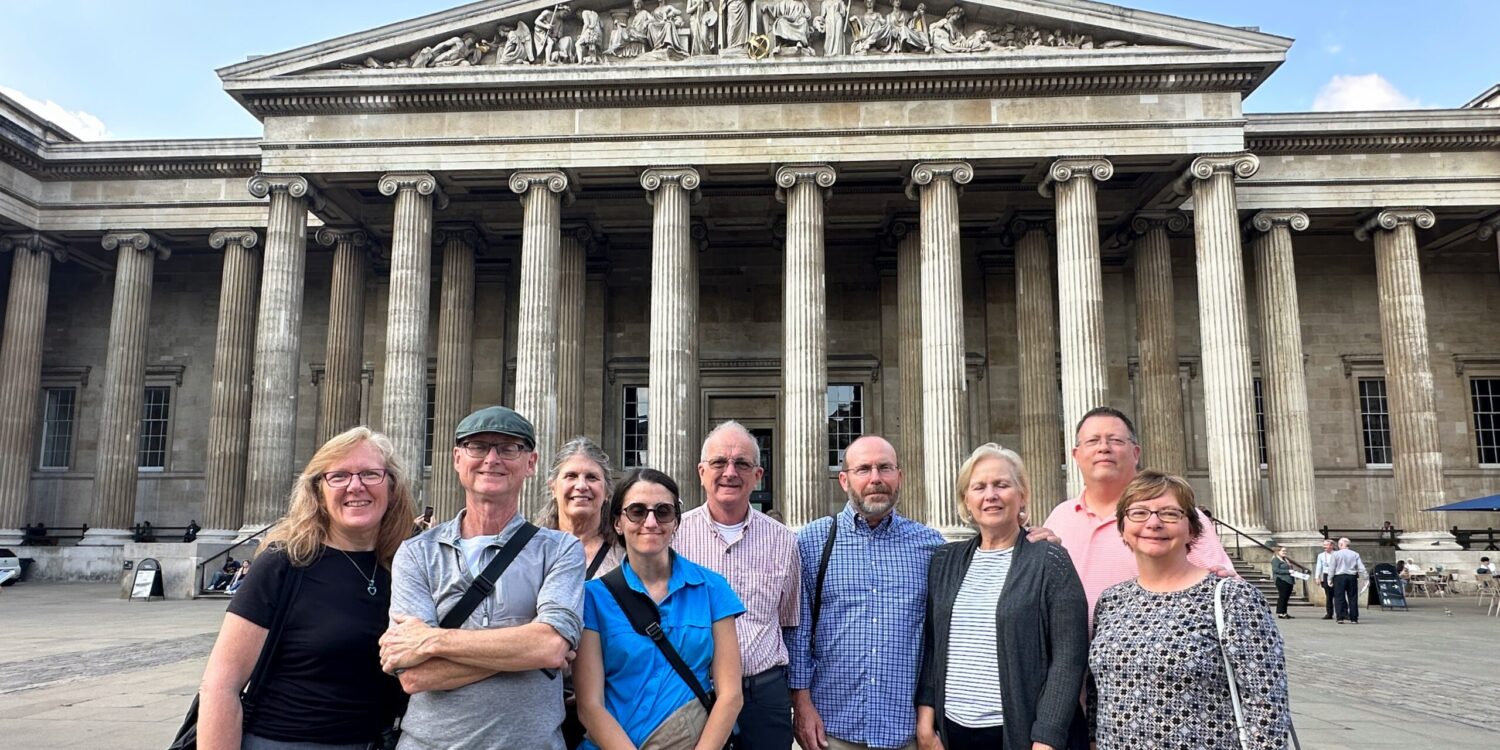
Biblical Archaeology and Ancient Finds in the British Museum
The British Museum is one of London’s most important places for exploring the archaeological world behind the Bible and the wider civilizations that shaped biblical history. This guide focuses on specific objects rather than generic museum categories, identifying museum numbers, provenance, dates, and historical context wherever the evidence allows. Some objects connect directly with people and events named in Scripture, while others illuminate Egypt, Assyria, Babylonia, Persia, Anatolia, Roman Britain, and early medieval England. The British Museum is also a major stop on our London Christian Tour itinerary.
Rosetta Stone
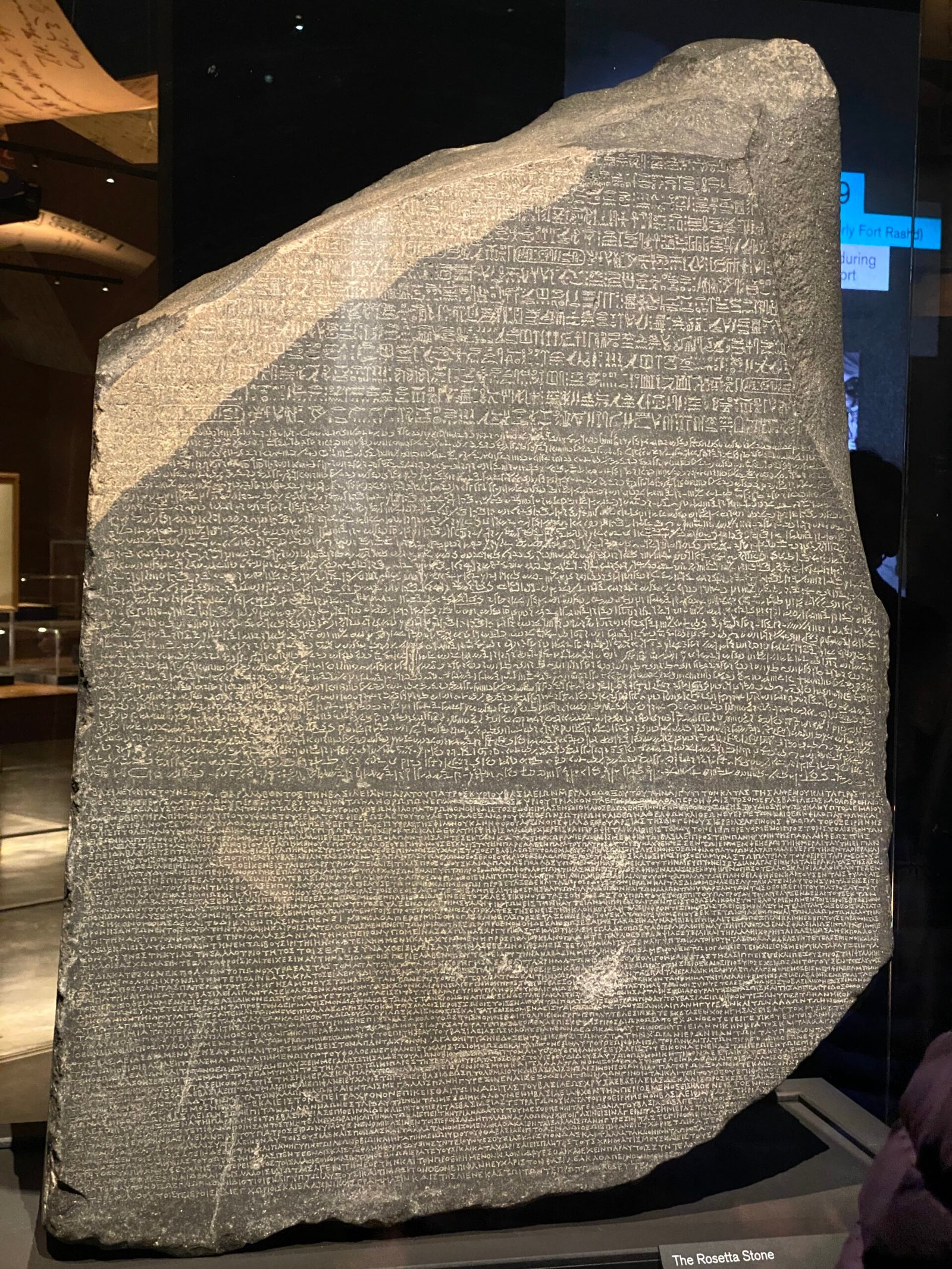 The Rosetta Stone (British Museum EA24) is a fragment of a granodiorite stela from Fort St Julien near Rashid (Rosetta), Egypt. Dated to 196 BC during the reign of Ptolemy V, it preserves the same priestly decree in hieroglyphic, Demotic, and Greek scripts. That parallel text became central to the modern decipherment of Egyptian hieroglyphs and makes the Stone one of the foundational objects in the history of Egyptology.
Key to Egyptian hieroglyphs
The Rosetta Stone serves as the key to unlocking the mysteries of Egyptian hieroglyphs. With its inscriptions in Greek, Demotic, and hieroglyphic scripts, it provided linguists and historians like you with the tools needed to decode the ancient language. As you explore this artifact, you’ll appreciate how it transformed our understanding of ancient Egypt.
Discovered in 1799
Discovered in 1799 by soldiers of Napoleon’s expedition, the Rosetta Stone was initially a mere curiosity. It wasn’t until later that scholars recognized its significance in translating Egyptian writing. This accidental find in the Nile Delta has since become a cornerstone of Egyptology, allowing you to connect with a culture that thrived thousands of years ago.
The story of the Rosetta Stone began when French soldiers stumbled upon it during their campaign in Egypt. As they worked on fortifications near the town of Rashid (Rosetta), they unearthed the stone, which contained the same decree in three different scripts. Fascinated, scholars quickly realized the potential it held for understanding Egyptian hieroglyphs. After its capture by the British in 1801, the stone made its way to the British Museum, where it remains a highlight of the collection today. Your journey through history truly comes alive as you stand before this incredible artifact!
Siege of Lachish Reliefs
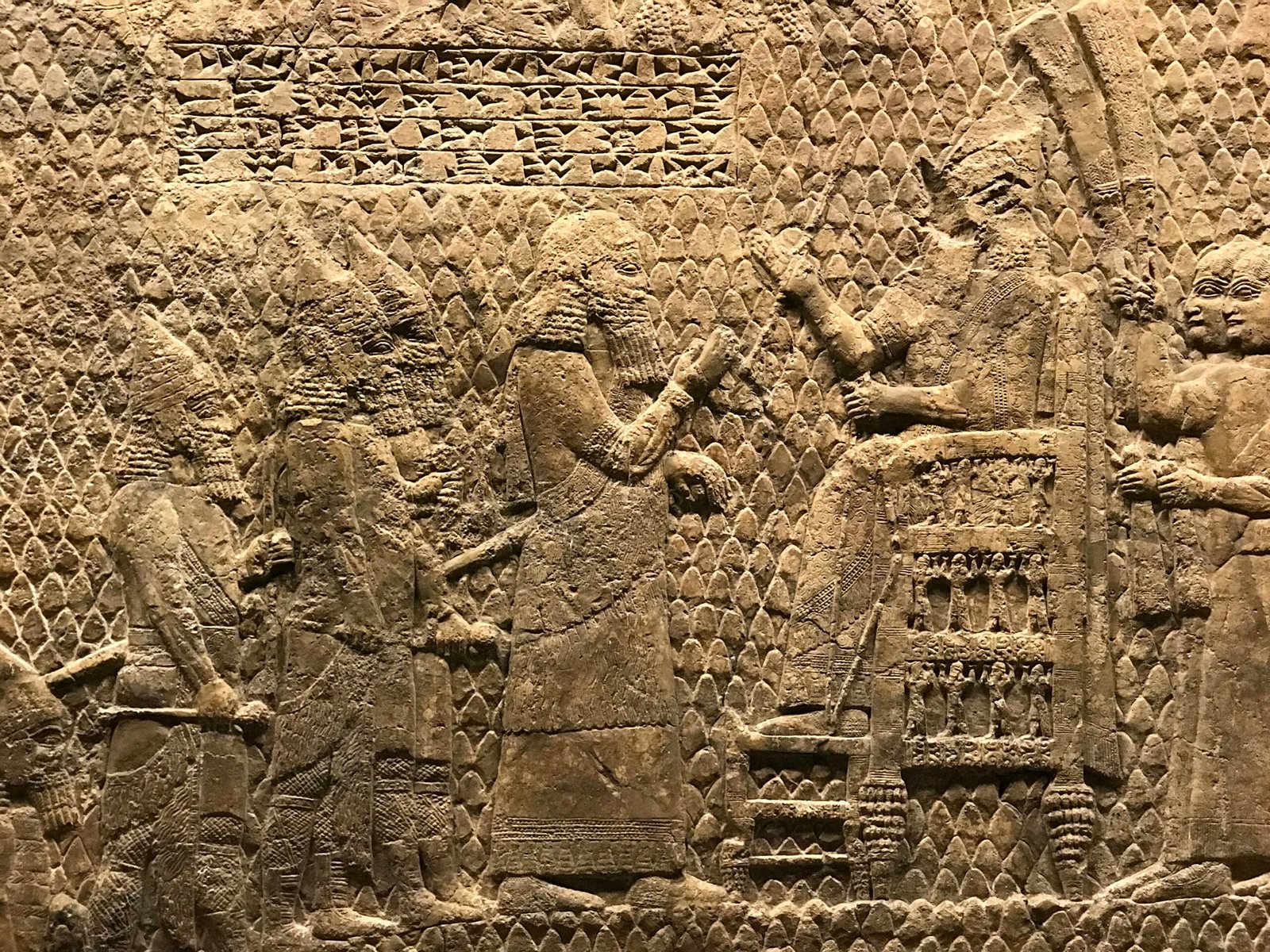 These panels belong to the Siege of Lachish relief cycle created for the palace of the Assyrian king Sennacherib at Nineveh. They depict the Assyrian capture of Lachish, one of the principal fortified cities of the kingdom of Judah, during Sennacherib’s campaign of 701 BC. Because the same campaign appears in the biblical record, the reliefs are among the British Museum’s most important objects for studying the historical world of the Hebrew Bible.
Sennacherib’s Campaign Against Judah
The reliefs show Assyrian troops attacking Lachish with siege ramps, archers, slingers, and battering rams, followed by scenes of captives and booty. A key panel, British Museum 124911, shows Sennacherib receiving captives after the capture of Lachish—a visual royal record of the same campaign that brought Assyria into conflict with Hezekiah’s Judah.
From the Palace of Nineveh
The Assyrian Reliefs in the British Museum were once housed in the grand palace of Nineveh, the capital of the Assyrian Empire. As you explore these reliefs, you can almost imagine the grandeur of the palace and the significance these artworks held in ancient royal life. They were designed not just for decoration but as powerful propaganda, illustrating the might of the Assyrian kings and their divine right to rule.
The palace of Nineveh, built by the renowned King Sennacherib in the 7th century BC, was adorned with these magnificent reliefs that depicted various aspects of Assyrian life, culture, and military achievements. As you view these artworks, consider the messages they communicated to both the people of the empire and their enemies. They showcased not only the fierce nature of the king’s campaigns but also his dedication to the gods and the prosperity of his nation. By immersing yourself in these stunning pieces, you gain unique insights into the beliefs and values that shaped one of history’s most powerful empires.
Babylonian Map of the World
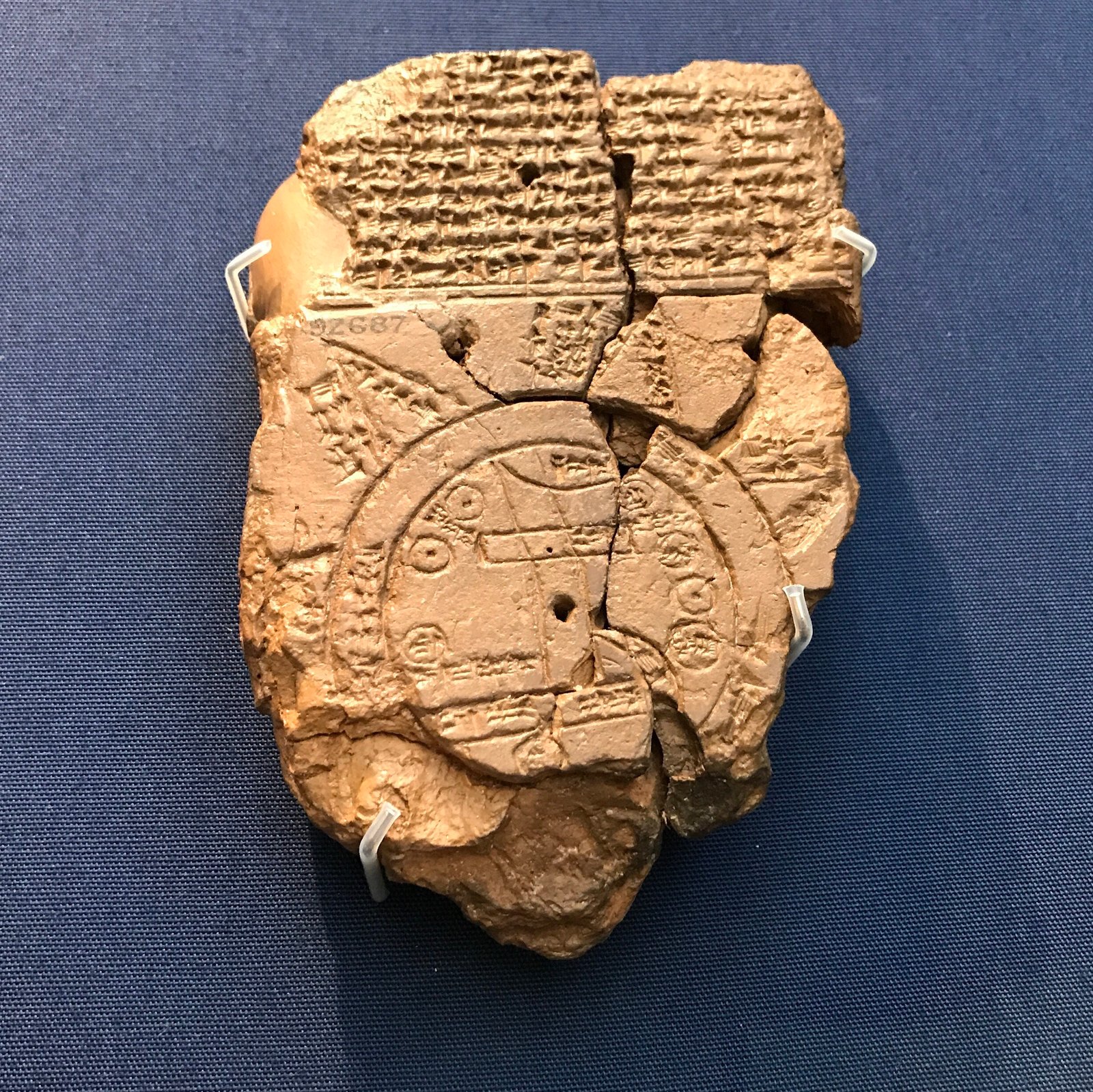 The object shown here is not a generic administrative tablet but the Babylonian Map of the World (British Museum 92687). This clay tablet depicts the known world as a disc encircled by a ring of water called the “Bitter River,” with Babylon marked beside the Euphrates and regions including Assyria identified around it. It preserves a remarkable Babylonian attempt to describe both geography and the wider cosmic world.
Babylon at the Center of the Map
Babylon is shown beside the Euphrates within the central circular world, while surrounding cities and regions are represented by labels and symbols. The map is especially valuable because it combines recognizable geography with a distinctly Babylonian view of how the world was ordered.
The “Bitter River” and the World Beyond
A circular band surrounds the mapped land and is labeled the “Bitter River.” Beyond it, triangular regions point toward remote or legendary places. The tablet therefore does more than plot cities: it offers a compact visual expression of Babylonian geography, cosmology, and ideas about the edges of the known world.
The Cyrus Cylinder
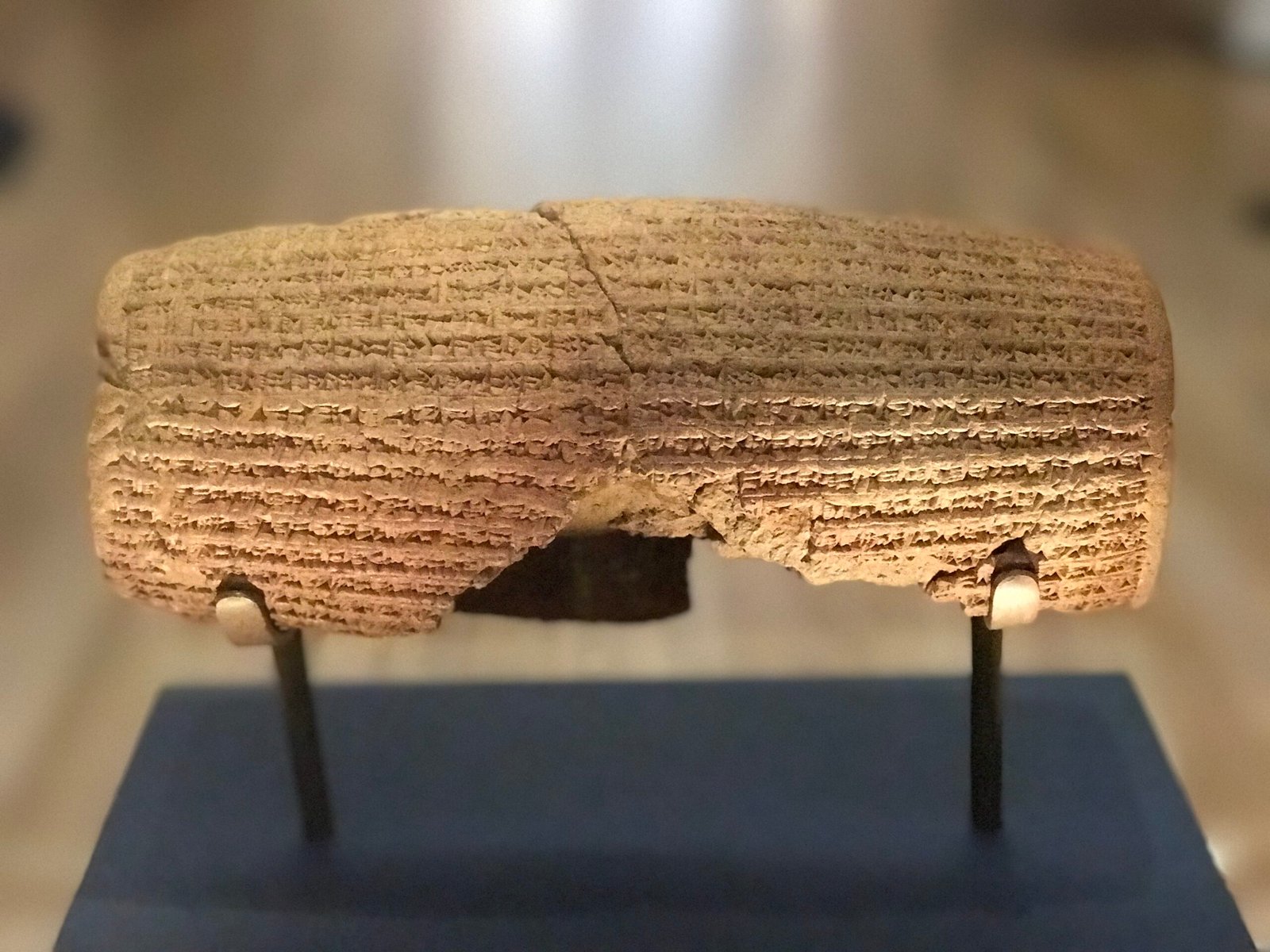
The Cyrus Cylinder (British Museum 90920) is a clay foundation inscription produced in Babylon after Cyrus the Great captured the city in 539 BC. Written in Babylonian cuneiform, it presents Cyrus as a legitimate ruler favored by Marduk and records the restoration of divine images and sanctuaries disrupted under Nabonidus. Its importance for biblical history lies in the broader restoration policy associated with Cyrus and the return from exile described in biblical texts such as Ezra.
A Royal Restoration Inscription
The cylinder has often been promoted in modern times as an early “charter of human rights,” but that description goes beyond what the ancient text actually says. It is better understood as a royal inscription that legitimizes Cyrus’s rule and describes restoration of temples, cults, and displaced divine images after the conquest of Babylon.
Cyrus and the Biblical Return from Exile
The cylinder itself does not mention the Jews, Jerusalem, or the Jerusalem Temple. Its relevance is contextual: Cyrus is known for restoring displaced cults and communities, while the biblical books of Ezra and 2 Chronicles specifically connect his reign with the return of Judean exiles and the rebuilding of the Temple in Jerusalem. Reading the museum object alongside those texts gives a more careful picture than treating the cylinder itself as the biblical decree.
This distinction matters because it preserves both the archaeological evidence and the biblical connection without forcing one text to say what only the other records. The cylinder is therefore especially valuable as historical context for the Persian imperial setting in which the biblical return from exile took place.
The Sutton Hoo Helmet — 1939,1010.93
The Sutton Hoo Helmet (British Museum 1939,1010.93) is one of the best-known objects from the early Anglo-Saxon ship burial excavated at Sutton Hoo in 1939. Dating to the late sixth or early seventh century, the iron helmet was richly decorated with tinned copper-alloy panels, animal interlace, warrior scenes, silver wire, gilding, and garnet inlay.
From Mound 1 at Sutton Hoo
The helmet came from the extraordinary ship burial in Mound 1, where a large vessel and a chamber filled with high-status objects transformed modern understanding of early Anglo-Saxon England. The British Museum displays the helmet in Room 41 alongside other material from the burial.
Warriors, Animals, and Elite Kingship
Its decoration includes interlaced animals and stamped warrior scenes known as the “Dancing Warriors” and “Fallen Warrior.” The workmanship and imagery place the object within the elite visual culture of early medieval northern Europe and make it one of the most important archaeological objects for understanding Anglo-Saxon rulership and identity.
Hinton St Mary Mosaic — 1965,0409.1
The Hinton St Mary Mosaic (British Museum 1965,0409.1) is an early fourth-century Romano-British mosaic floor found at a villa in Dorset. Its most famous feature is a central human bust set before a Chi-Rho monogram, making the pavement especially important in discussions of Christianity in late Roman Britain.
A Christian Symbol in Roman Britain
The Chi-Rho combines the first two Greek letters of Christ’s title and became one of the most recognizable symbols of early Christianity. Its position behind the central bust has led scholars to discuss whether the image may represent Christ, although the interpretation should be treated cautiously rather than presented as certain.
Mythology, Hunting, and Christian Imagery
The wider mosaic combines the central roundel with hunting scenes and a panel of Bellerophon on Pegasus attacking the Chimera. That mixture of classical and Christian imagery makes the pavement a particularly revealing object for understanding the changing religious world of fourth-century Roman Britain.
Roman-Period Mummy of an Unnamed Young Man — EA24800
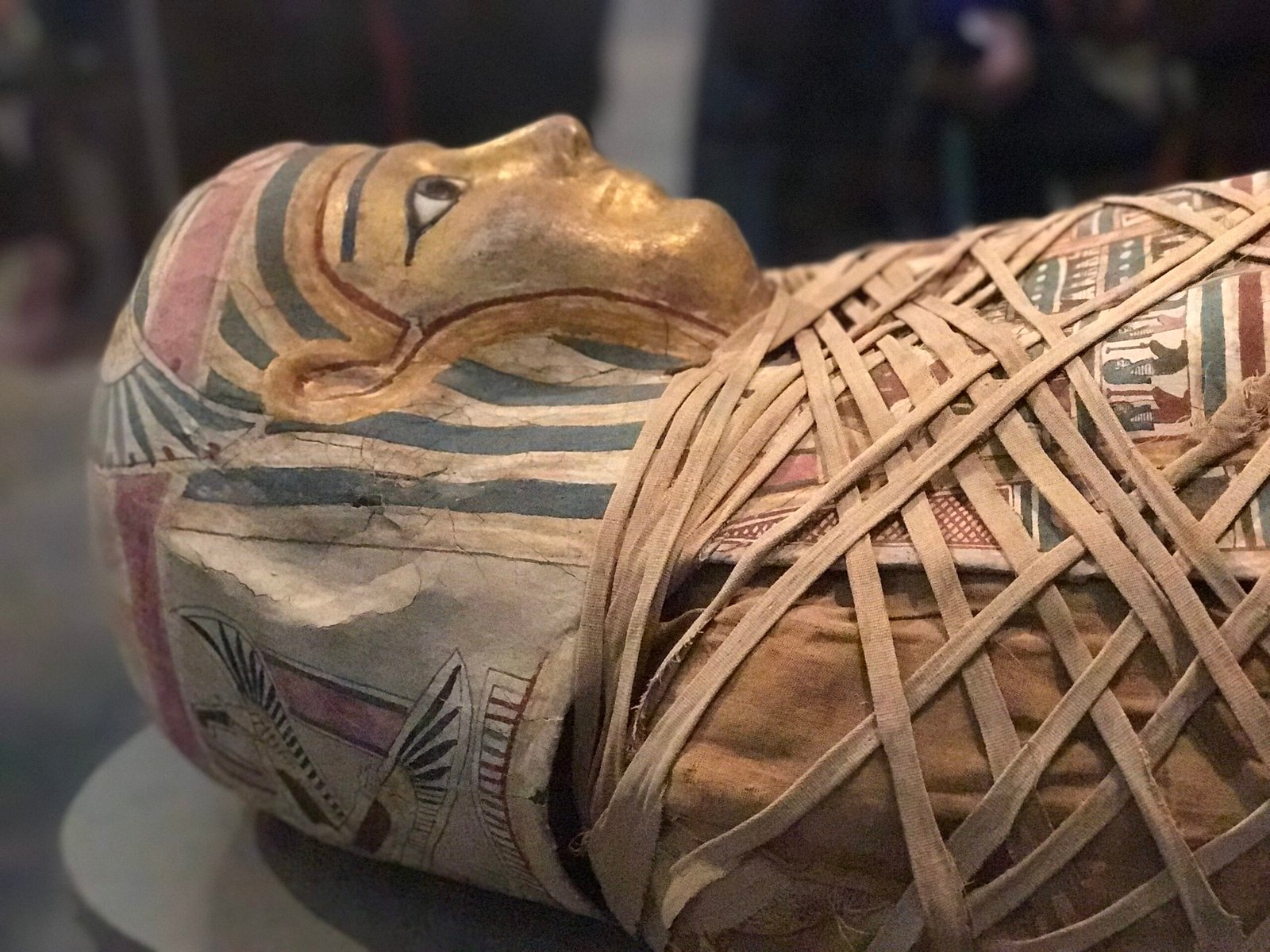 The mummy shown here is British Museum EA24800, the Roman-period mummy of an unnamed Egyptian man who died at about 20–21 years of age. His head and chest are covered by a painted cartonnage mask with a gilded face and dark-blue glass outlining the eyes and eyebrows, while the surviving wrappings preserve a striking outer network of linen bands.
Cartonnage Mask and Wrappings
The cartonnage mask preserves a gilded face, painted decoration, and protective imagery, while the mummy itself is about 162 cm long. British Museum examination records the arms crossed over the chest and extensive linen packing within the body. The combination of human remains, wrappings, mask, and coffin makes EA24800 especially useful for understanding Roman-period Egyptian funerary practice.
Roman-Period Egyptian Funerary Tradition
EA24800 belongs to Egypt’s Roman Period, when long-established Egyptian funerary beliefs continued alongside changing artistic styles and foreign rule. Its gilded mask, painted protective deities, mummification, and elaborate wrapping show how traditional ideas about protection and the afterlife remained embedded in burial practice centuries after the pharaonic age.
Neo-Hittite Storm-God Relief from Carchemish — BM 117909
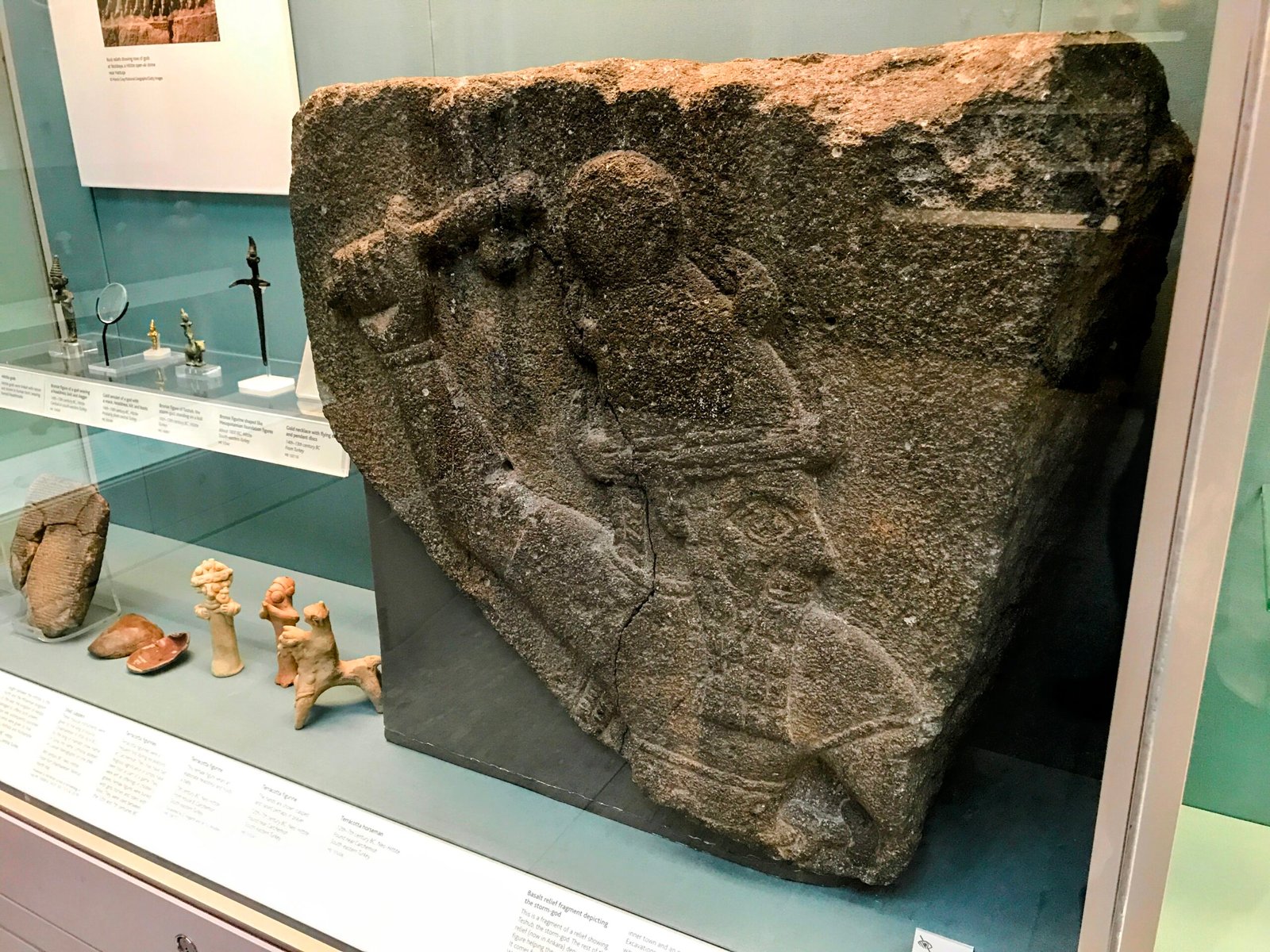 The object shown here is British Museum 117909, a Neo-Hittite basalt relief fragment from the King’s Gate at Carchemish. Dating to about the 10th century BC, it depicts the storm god raising a hammer in his right hand. Carchemish stood on the Euphrates and became one of the most important successor centers preserving Hittite and Luwian traditions after the collapse of the Late Bronze Age Hittite Empire.
Carchemish and the Neo-Hittite Kingdoms
Carchemish was a major city of the Hittite world and remained an important Luwian-speaking political center in the Iron Age. Reliefs such as this one preserve the visual language of the Neo-Hittite kingdoms and help trace the cultural continuity between the Late Bronze Age Hittite tradition and its successor states in northern Syria and southeastern Anatolia.
A Storm God in Neo-Hittite Religious Art
The storm god was one of the dominant divine figures of the Hittite and Luwian religious world. In this relief he is identified by the raised hammer, a visual attribute associated with the weather deity. The image gives visitors a direct look at how divine power was represented in the monumental art of the Neo-Hittite kingdoms.
A Treasure Trove of History
Seen together, these objects show why the British Museum is far more than a collection of isolated antiquities. The Lachish reliefs place us inside Sennacherib’s campaign against Judah; the Cyrus Cylinder helps reconstruct the Persian world of the return from exile; the Babylonian Map preserves a Mesopotamian view of the world; and objects from Egypt, Carchemish, Roman Britain, and Sutton Hoo reveal the wider cultures surrounding the biblical and Christian story. For travelers who want to explore these connections in person, see the full London Christian Tours itinerary and our tour FAQ.