
The Rosetta Stone: Unlocking the Secrets of Ancient Egypt
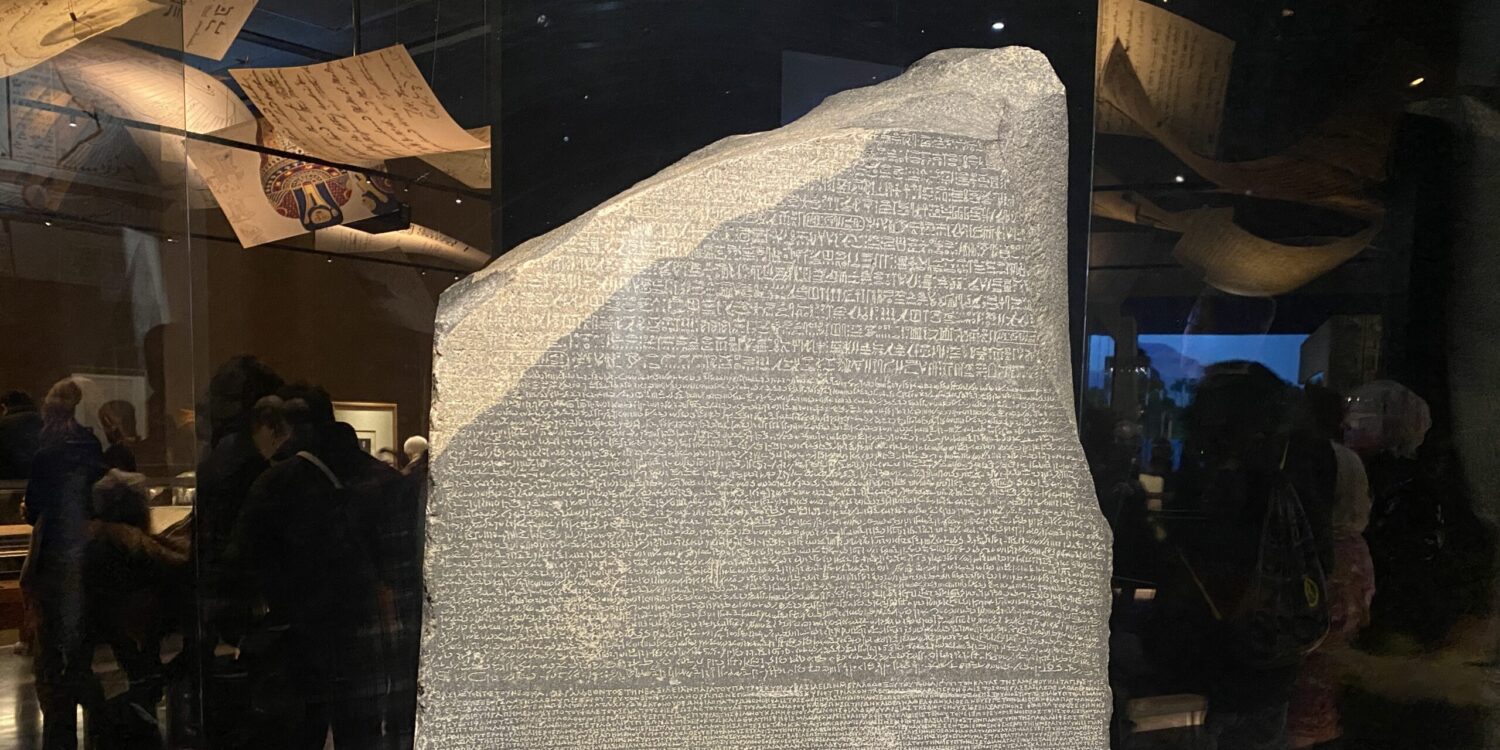
 The Rosetta Stone (British Museum EA24) is a fragment of a granodiorite stela found in 1799 at Fort St Julien near Rashid (Rosetta), Egypt. Its three-script inscription became one of the key sources used to decipher Egyptian hieroglyphs and helped open the written record of ancient Egypt to modern scholarship. Its importance lies not just in its historical value but in how it bridged the gap between ancient and modern understanding of Egyptian civilization.
A Trilingual Key to the Past
Dating back to 196 B.C., the Rosetta Stone is a granodiorite slab inscribed with a decree issued during the reign of Ptolemy V Epiphanes. What makes the Stone unique is its trilingual text: the same decree is written in Greek, Demotic (a common script of daily Egyptian life), and Egyptian hieroglyphs. At the time of its discovery, hieroglyphs were undeciphered, their meanings having been forgotten for centuries.
The Greek text, which was still understood, provided the key to unlocking the other two scripts. Through meticulous study, French scholar Jean-François Champollion successfully deciphered the hieroglyphs in 1822, revolutionizing the study of ancient Egypt. Thanks to the Rosetta Stone, scholars gained access to thousands of previously unreadable inscriptions, illuminating the culture, religion, and governance of one of history’s most fascinating civilizations.
The British Museum’s Star Attraction
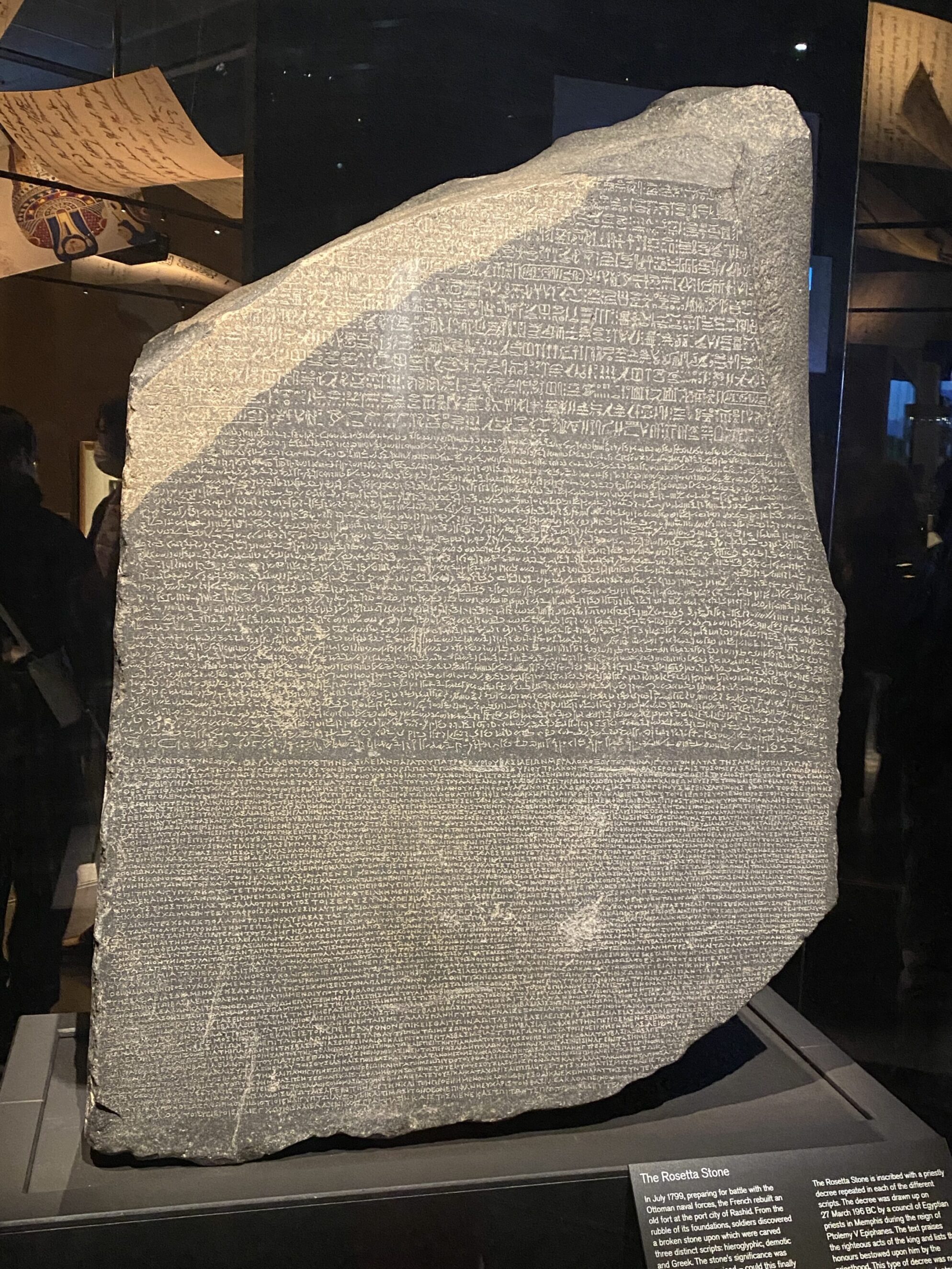
Today, the Rosetta Stone is one of the most visited artifacts in the British Museum. Displayed in Room 4, it stands as a testament to human curiosity and the determination to understand the past. Visitors can see the clear inscriptions on the Stone’s surface, with the Greek text at the bottom, Demotic in the middle, and hieroglyphs at the top. The surviving fragment measures about 112.3 cm high, 75.7 cm wide, and 28.4 cm thick, large enough for the three blocks of text—hieroglyphic, Demotic, and Greek—to remain clearly distinguishable.
Rosetta Stone Historical Context
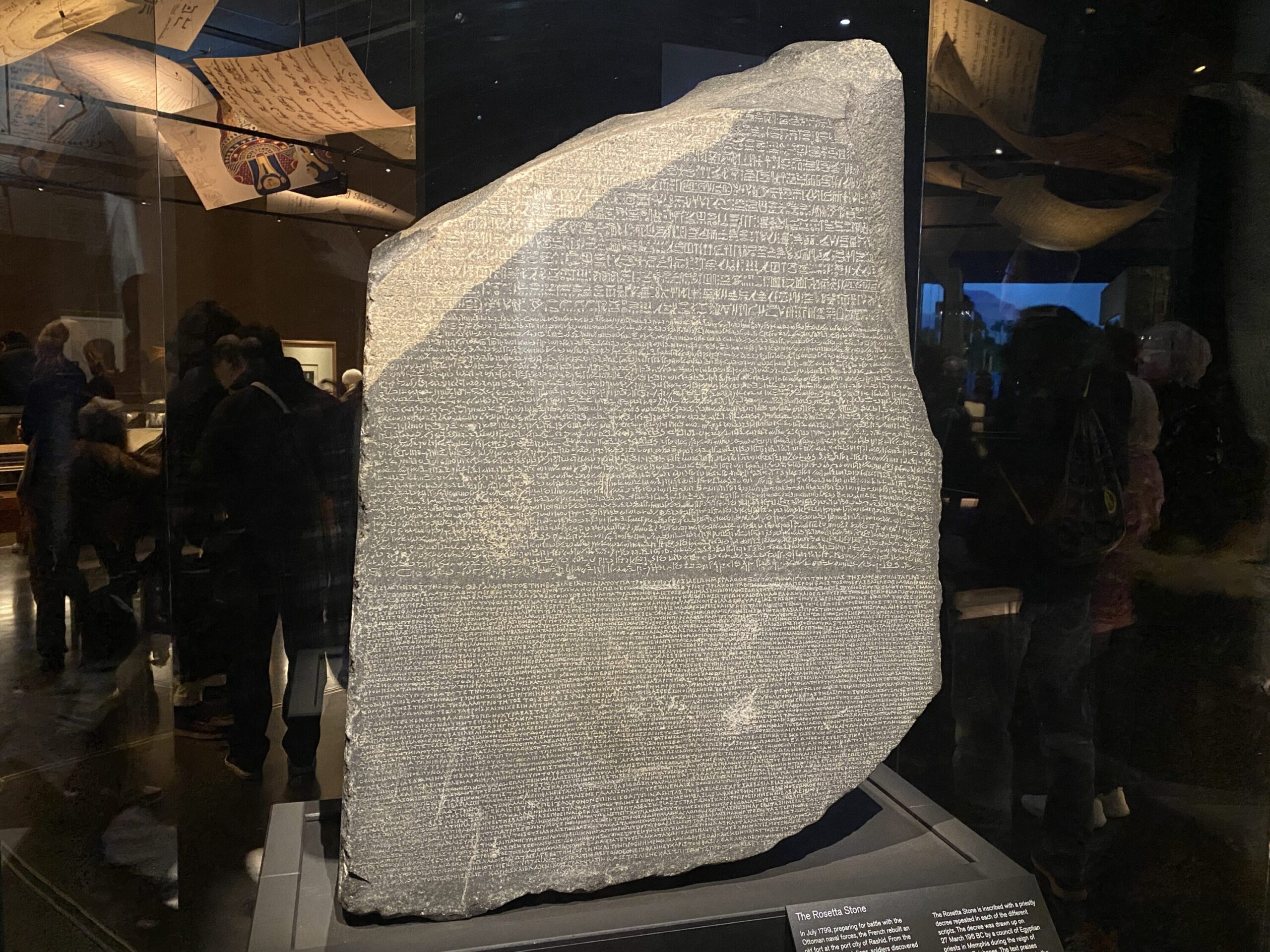
The decree inscribed on the Rosetta Stone was issued to affirm the royal cult of Ptolemy V, a common practice in the Hellenistic period to solidify the ruler’s divine status. The trilingual text reflects the multicultural nature of the Ptolemaic Kingdom, which ruled over a diverse population of Greeks, Egyptians, and others. This blending of cultures is evident in the Stone itself, where the Greek language—used for administration—coexists with the native Egyptian scripts.
The Stone’s discovery also underscores the global significance of Egypt during the Napoleonic era. Found by French soldiers during Napoleon’s campaign in Egypt, it was later seized by the British after their defeat of the French forces. It has been in British possession since 1802, sparking debates about cultural heritage and the repatriation of artifacts.
A Highlight of Our London Christian Tour
As part of our London Christian Tours, the Rosetta Stone serves as a fascinating stop that connects ancient history to modern discovery. While our focus is typically on biblical artifacts, this piece offers a broader look at the ancient world and its interconnectedness. It’s a prime example of how understanding one artifact can unlock the secrets of an entire civilization.
For a broader look at the objects we discuss in the museum, see our guide to biblical archaeology and ancient finds in the British Museum. If you are planning to join us, you can also review the tour cost and inclusions and our London Christian Tour FAQ. Whether you’re a history enthusiast or simply curious about the ancient world, the Rosetta Stone is a must-see. Its legacy as a tool of translation and its role in shaping modern Egyptology make it one of the most important artifacts in human history. Standing before it, you’ll gain a deeper appreciation for the ingenuity and perseverance that brought ancient Egypt’s story back to life.